

How to change your strings.
String changing explained
10 quick steps for changing strings.
-
Loosen the old strings
Adjust the tuning pegs to slacken the strings until there’s no tension left. -
Remove the old strings
Unwind them from the tuning pegs and pull them out of the bridge (or cut them if they’re stubborn). -
Clean the guitar (optional but smart)
With the strings off, wipe down the fretboard and body— your guitar will thank you. -
Insert the new strings
Put each new string through the bridge, making sure it’s seated properly. This goes for both acoustic and electric, if the string is not seated properly it may snap when tensioned -
Pull the string to the tuning peg
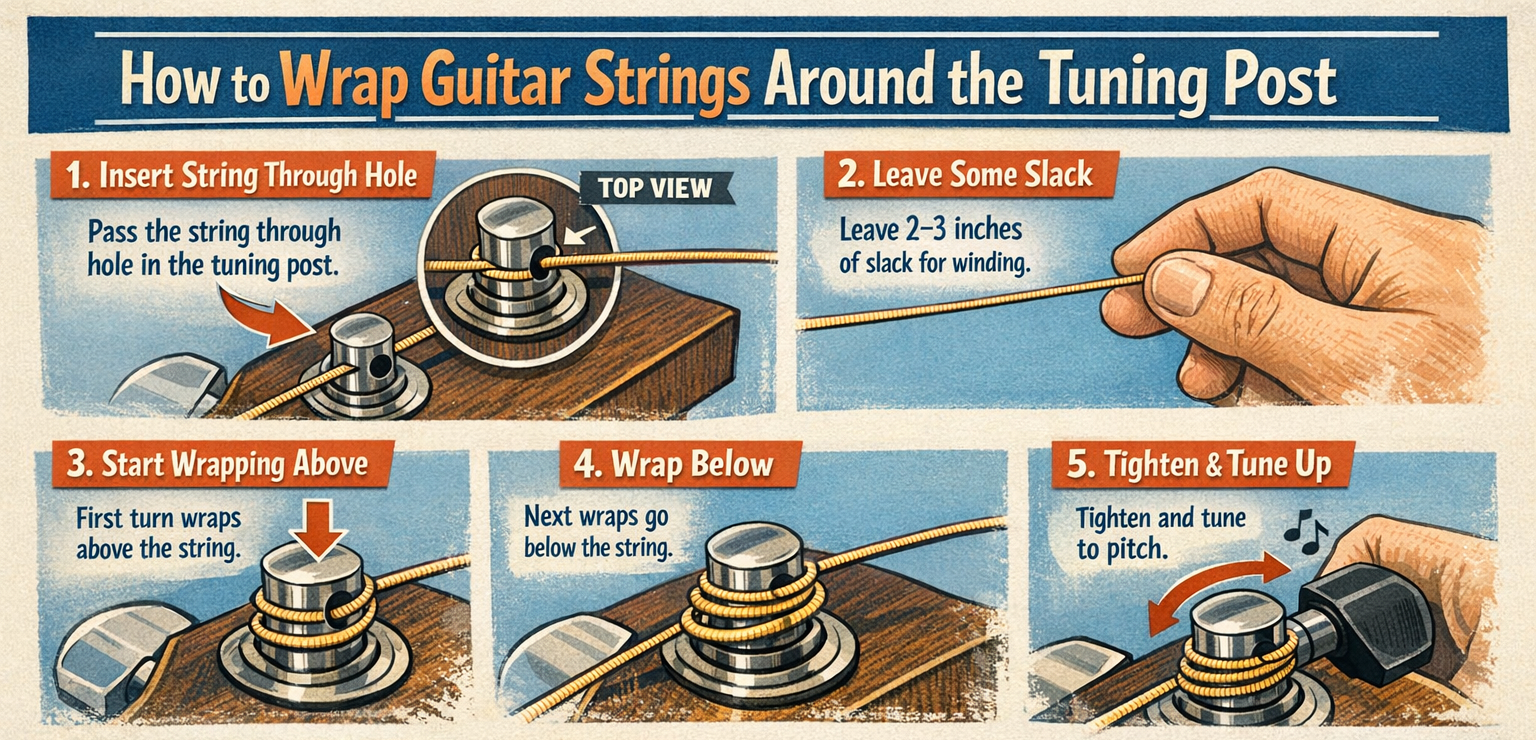
Guide the string up the neck and through the hole in the correct tuning peg. -
Leave a little slack
Pull the string tight, then loosen it slightly (about 5–7 cm) so it can wrap neatly. -
Wind the string
Turn the tuning peg so the string wraps downward around the peg, nice and tidy. -
Tune the string up
Bring the string up to pitch using a tuner (don’t rush it). -
Stretch the strings
Gently pull each string upward along the neck, then retune. Repeat until it holds tune. -
Final tune and trim
Tune all strings one last time and snip off any excess string ends.
Andrew Armstrong Luthier
What strings should I use?
- Nylon string acoustic
- Steel string acoustic
- Electric guitar
- Bass guitar
String choice is often about string gauges, the thicker the string, often the fuller the sound, however, the harder they are to press down or bend. So for beginners, we recommend a lighter gauge.
Book An Appointment
Call today to book an appointment, to make sure your instrument plays the way it should.
Our Location
Unit 5, 101 Jijaw St. Sumner Park. Brisbane Qld 4074
Get in Touch
Open Hours
Monday – Friday: 9:30 am – 4:30 pm
Saturday – Sunday: Closed (or by appointment)